
In a fast-growing community outside Entebbe, a Rotary buddy group is trying to settle disputes before they reach a courtroom.
The chairs ran out.
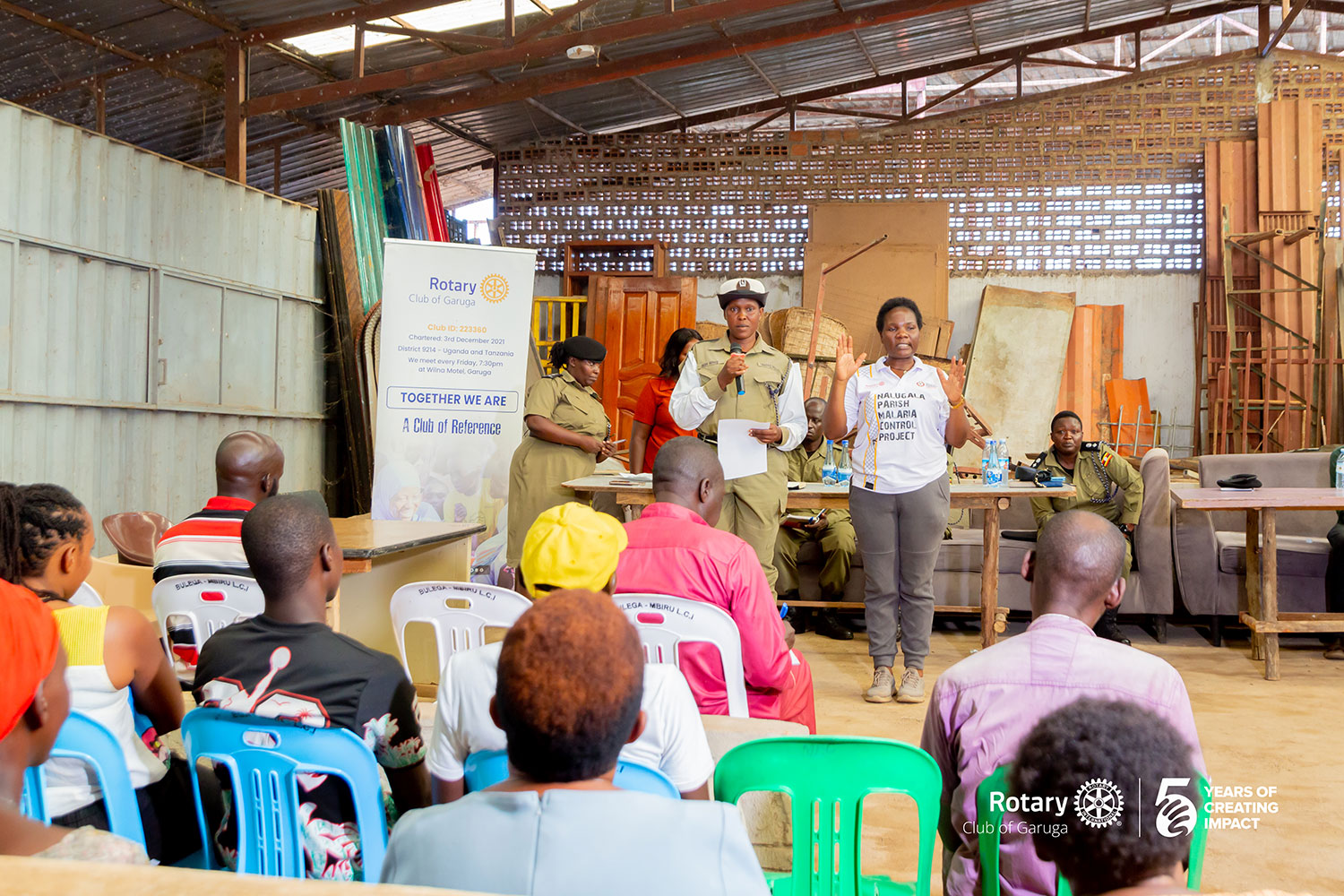
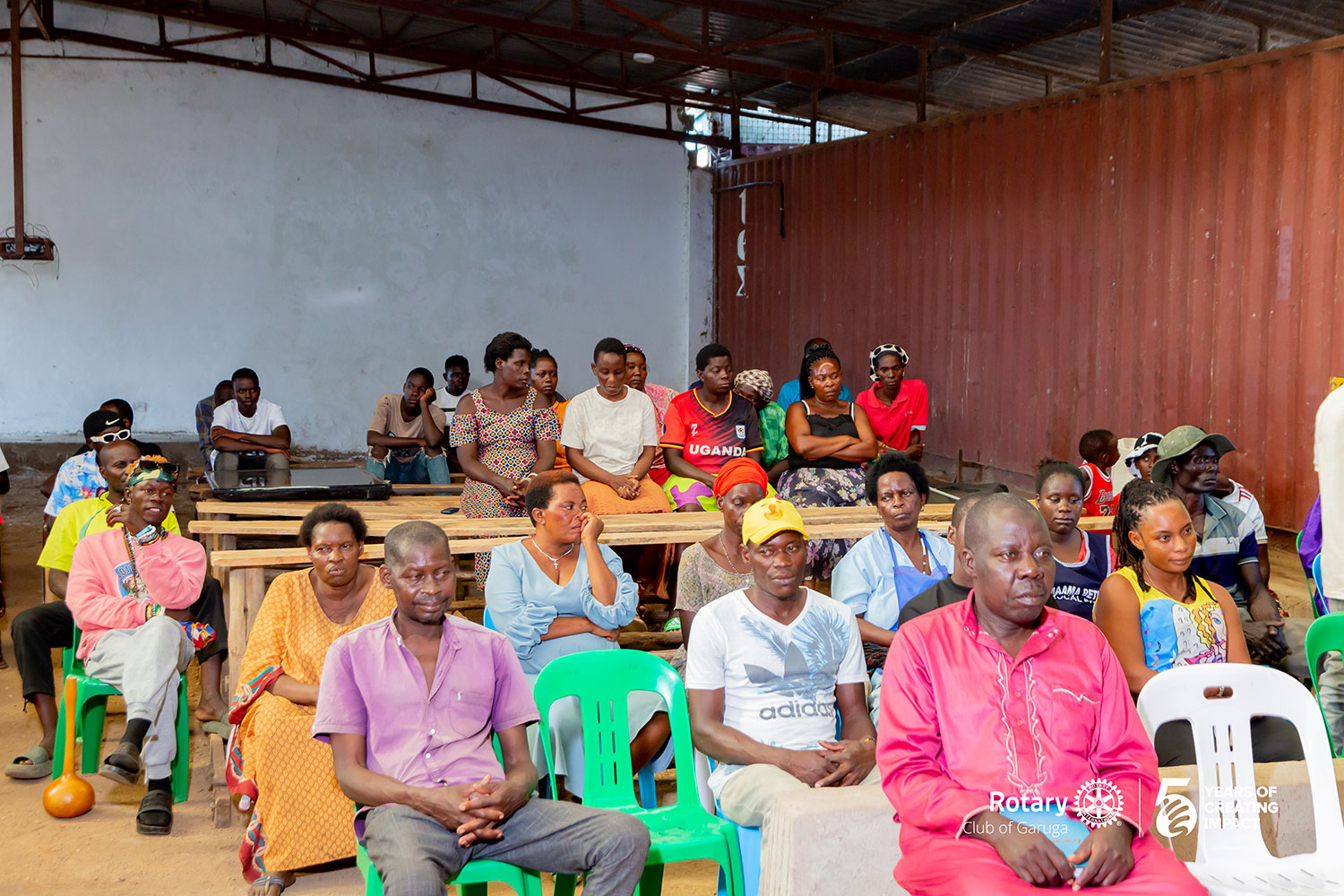
They had been set out in rows under the shelter at Gerenge, enough for a good turnout on a Friday afternoon, and by three o’clock they were full, and people were still arriving. Women in patterned dresses and headscarves, sitting shoulder to shoulder—men along the edges. Children folded into laps. At the front, a table with a white cloth and a jug of water; behind it, a woman in the dark blue uniform of the Uganda Police Force.
Nobody had come for a handover. There was no borehole to commission, no roof to unveil, no cheque to photograph. The Rotary Club of Garuga had come to Gerenge to do something considerably harder to explain to a donor: to ask a community to talk about the things it had stopped talking about.
What grows in the silence
Gerenge sits along the Entebbe Road corridor, in the path of everything moving south out of Kampala. Land that was farmed a decade ago is now surveyed and fenced. Families arrive. Plots are subdivided, sold, subdivided again.
The disputes that follow this kind of growth do not appear in any national statistic. A boundary stone shifts in the night. A tenancy nobody wrote down. A husband and wife who have not spoken properly in three planting seasons. Two families who now take different paths to the same borehole so they will not have to meet on the way.
Left alone, these things do not stay small. A contested plot goes unplanted for a season, then two. A case opens and school fees go into a lawyer instead. And children learn, from watching, that the way to handle a disagreement is to stop speaking — or to shout.
[QUOTE — Buddy Group Chair: one or two sentences on why the group chose dialogue over a hardware project. Ask: what made you pick this?] — says [name], who chairs the Katabi Buddy Group of the Rotary Club of Garuga.
The group’s proposal to the club was, on paper, almost nothing. An afternoon. Some chairs. A facilitator worth listening to.
The uniform that arrives early
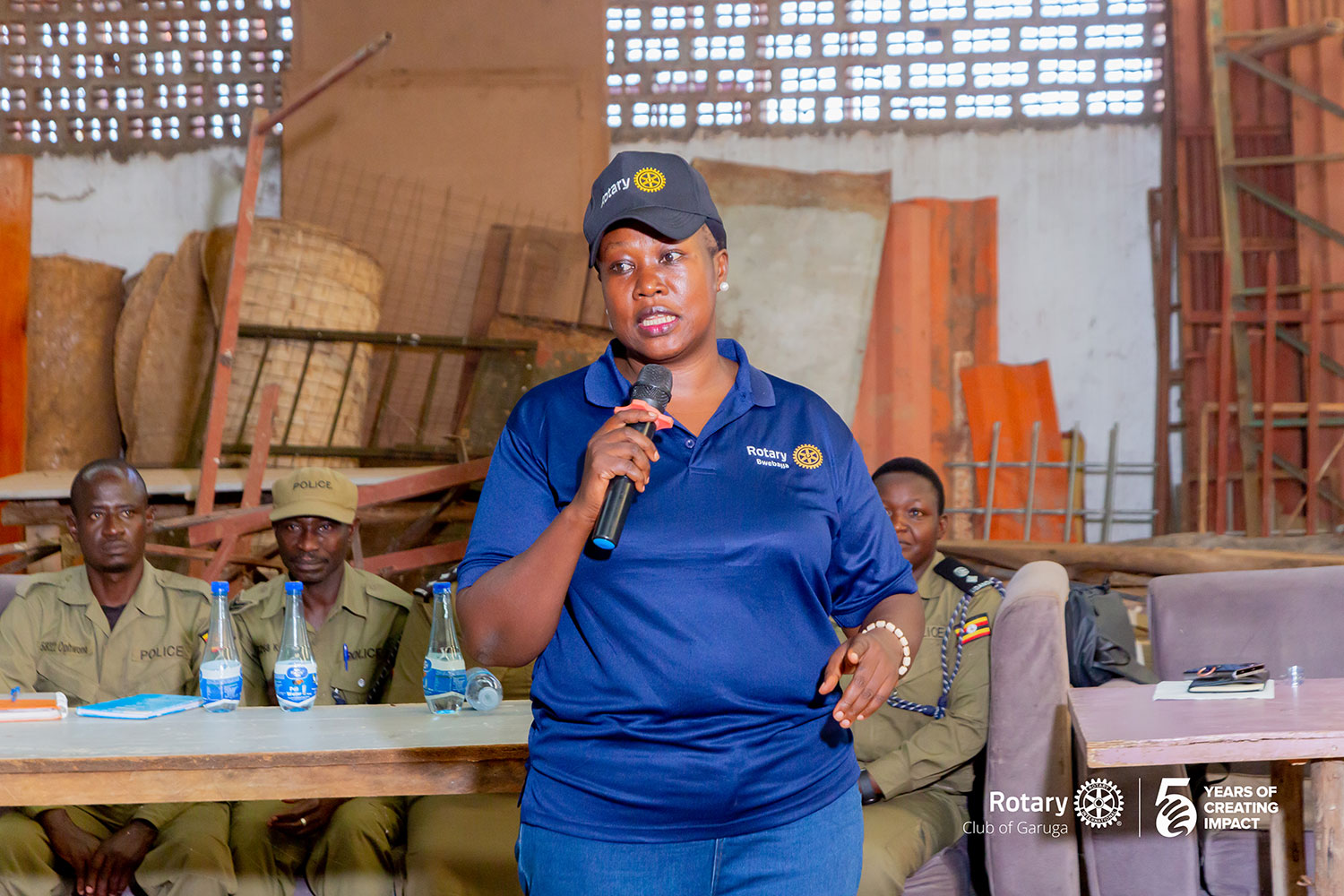
The facilitator was Rtn AIGP Dr. Hadijah Namutebi, an Assistant Inspector General of the Uganda Police Force and a member of the Rotary Club of Bwebajja.
In most communities, the uniform appears late — after the boundary has been destroyed, after the marriage has broken, after somebody has been hurt. On 21 August it arrived at three in the afternoon, sat down, and started asking questions.
Dr. Namutebi took the gathering through the ordinary anatomy of a dispute: how it begins over something small, why it hardens when nobody steps in, and the point — always earlier than people assume — at which it can still be settled by a conversation rather than a summons. She mapped what already exists in Gerenge to help, structures many residents had never been shown how to use: LC leadership, family mediation, the police community-liaison desk.
[QUOTE — Dr. Namutebi: one quote on why early intervention matters, or on what she saw in that room. Two sentences maximum. Worth a phone call to obtain.]
Then she stopped, and Gerenge started.
What a room sounds like when it changes
What follows in a dialogue like this is undramatic and difficult to photograph.
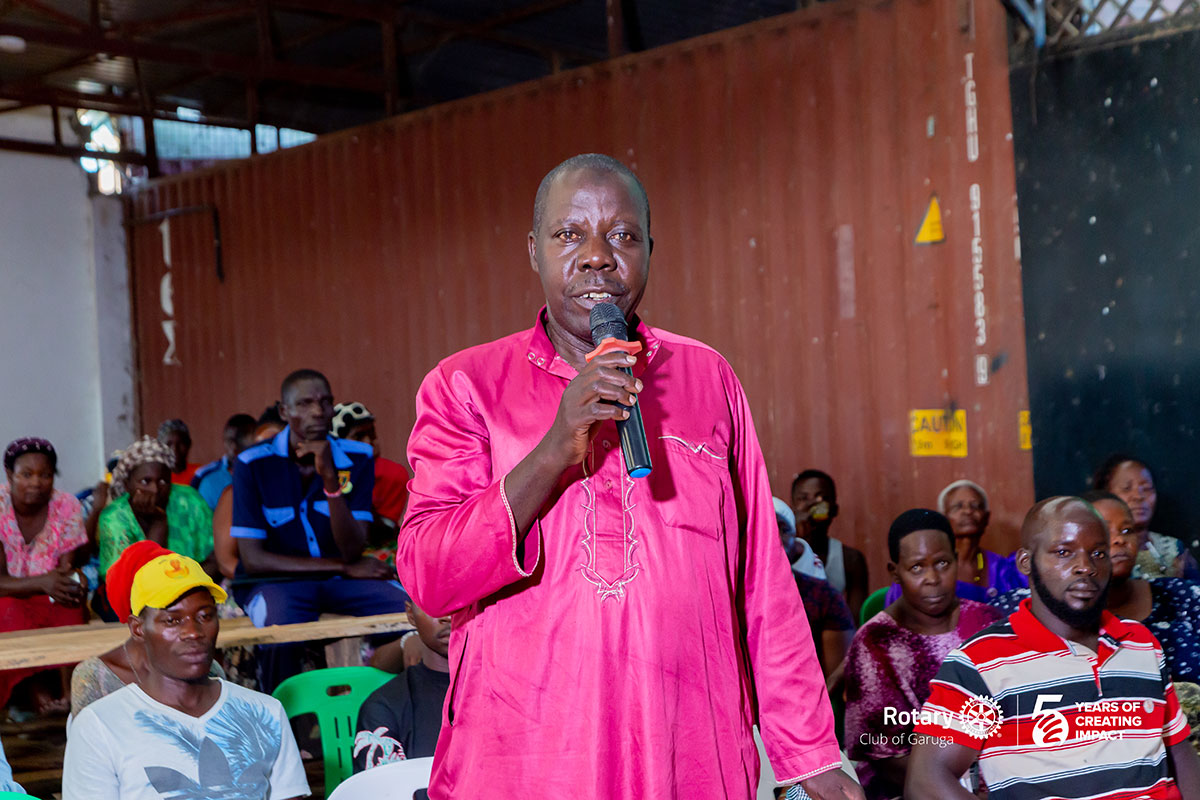
Somebody describes a boundary in general terms. Somebody four rows back recognises the description. A woman asks a question about her marriage in the careful, hypothetical way that means it is not hypothetical at all. Nothing is signed. No case is closed.
But grievances that had been carried privately for months are said out loud, in front of neighbours, without anyone raising a voice — and everyone in the circle can feel the temperature change. For disputes that had been surviving on silence, that is not a small thing.
[QUOTE — Participant: a resident, ideally a woman, on what she said or heard that afternoon. With permission; first name only if she prefers. This is the single most valuable sentence in the article.] — says [name], who has lived in Gerenge for [X] years.
[OUTCOME — if any concrete result can be confirmed (a dispute raised openly, two parties who agreed to meet afterwards, a resident who volunteered to mediate), it belongs here, in one plain sentence.]
Cheap and foundational
Peace and Conflict Resolution is one of Rotary’s seven Areas of Focus, and it is the one that photographs worst.
A borehole serves a community that can agree where to sink it. A classroom teaches children whose parents are not in court over the plot behind it. A savings group lasts precisely as long as its members trust one another. Every visible project in a place like Gerenge is underwritten, silently, by the community’s ability to settle its own arguments.
The Rotary Club of Garuga spent a Project of the Month on the underwriting. Its return will not appear in a photograph. It will appear as the case that never opened, the marriage that held, the two families who go back to using the same path.
After the chairs are folded
The club intends to return — to find out which of the disputes surfaced that afternoon have moved, and to train a small group of local peace volunteers so that Gerenge does not need anyone to drive in from Katabi to begin the conversation.
Beyond that, the buddy-group model exists so that this can travel. There is no obvious reason Bridges of Peace should stop at one community on this corridor.
By late afternoon the shadows had come round, and the chairs were being stacked. People stood in twos and threes, still talking. Some of them, a few hours earlier, had not been speaking at all.
The Rotary Club of Garuga is building peace along the Entebbe road corridor through community dialogue, mediation, and its buddy-group model.