
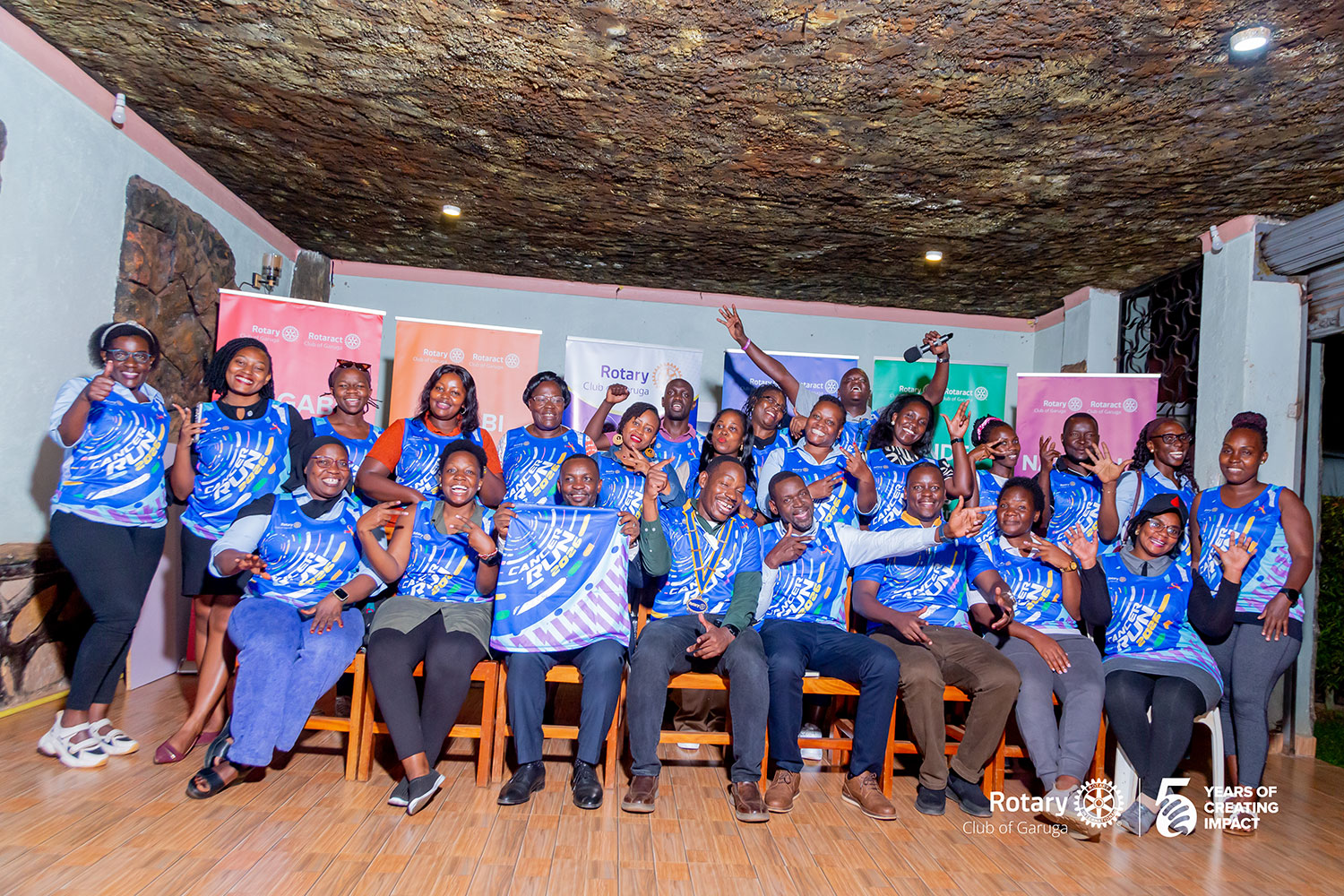
On the busiest Friday of its year, the Rotary Club of Garuga made a third commitment — this one to people it will never meet.
There is a particular kind of tiredness that comes at the end of a good Friday, and by the time the Cancer Run activation began, the Rotary Club of Garuga had earned it.
The afternoon of 21 August had been spent in Gerenge, sitting with a community trying to settle its own disputes. The evening had been spent under the eye of Assistant Governor Paul Kigonya and Past District Governor Peace Taremwa, being asked hard questions about membership, image and giving. It would have been an entirely respectable day to end there.
Instead, the club stayed in the room and committed itself to two hundred kits.
A race about something else
The Rotary Cancer Run is the largest single fundraising event in the Rotary calendar in Uganda, and it is not really about running.
Uganda records roughly 34,000 to 36,000 new cancer cases every year, and between 23,000 and 25,000 deaths. The gap between those two numbers is where the run does its work — because for a great many families, a cancer diagnosis in this country is a financial event before it is a medical one. The distance between a treatable cancer and a fatal one is frequently measured not in tumor stages but in transport fares, bed space and the price of a scan.
The shortage is most acute in radiotherapy. International standards call for one radiotherapy machine per million people. Uganda has a population of some 45 million and three machines, all at the Uganda Cancer Institute, with two more planned at Nsambya Hospital. The arithmetic is not complicated, and it is not survivable.
Proceeds from this year’s run go towards completing the One Stop Cancer Centre at Nsambya Hospital, the chemotherapy, surgical, palliative and radiotherapy infrastructure that successive editions of the run have been building since 2016. It is the kind of project that takes fifteen years and does not photograph well at any stage.
Ggwanga Mujje
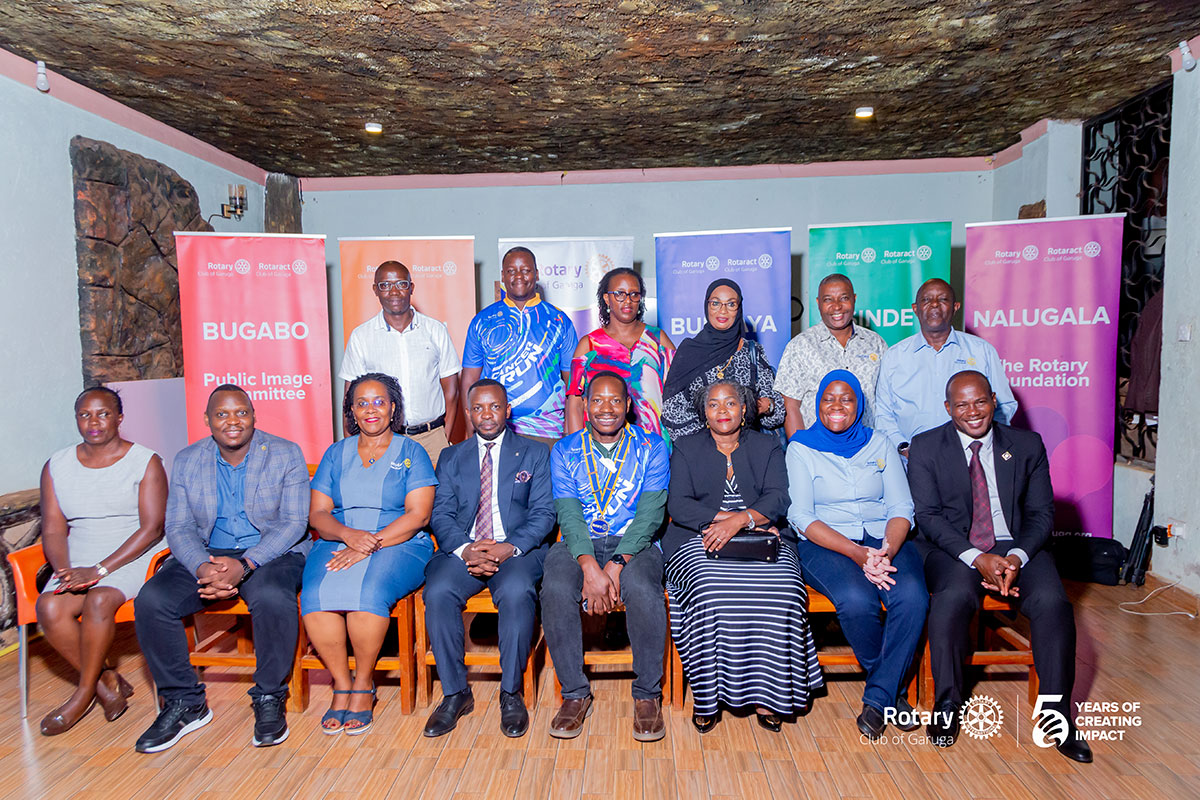
The 15th edition of the Rotary Cancer Run takes place on Sunday, 30 August 2026, starting at 6:00 a.m. at Kololo Independence Grounds and in major towns across the country, under the theme Ggwanga Mujje, a call for the nation to come.
The run is organised by Rotary Clubs of Uganda, but it has never been a county event in any meaningful sense. Clubs from all over the world run in it, fundraise for it, and are counted in it. Cancer does not check which side of a district boundary a patient was diagnosed on.
The commitment
The activation at the club was the moment the intention became a number.
The Rotary Club of Garuga committed to purchase two hundred kits for the 2026 Rotary Cancer Run at the vest kit price of UGX 30,000, a contribution of UGX 6,000,000, and to mobilise beyond its own membership, bringing family, friends, partners and the wider Garuga community to the start line at Kololo.
That last part matters more than it sounds. A club of any size can buy a stack of kits and call it participation. The clubs that move the needle are the ones that treat the run as an invitation to be extended rather than a bill to be settled, and ask the neighbor, the colleague, the client, the person who has never set foot in a Rotary meeting and has no intention of joining one.
“Nobody in this room can cure cancer. What we can do is make sure that somebody diagnosed next year is not turned away for reasons that have nothing to do with medicine. That is a problem money can solve, and money is a problem a club can solve.”
— Rtn. Nathanael Kasozi, President, Rotary Club of Garuga
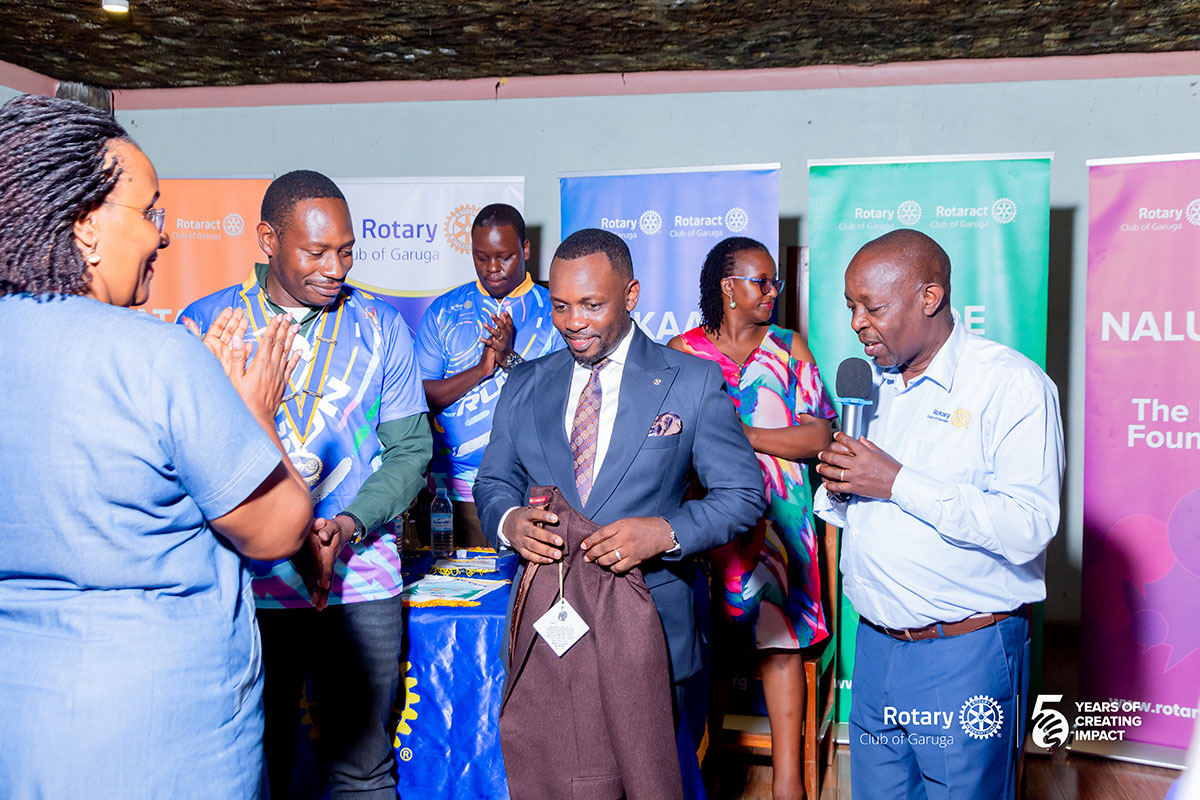
Why a club takes on a third thing
It is fair to ask why a club that had already delivered a community dialogue and hosted its Official Visit would take on anything else in the same twelve hours.
The answer is that these were not three unrelated items on a crowded agenda. They were the same commitment at three different distances.
At Gerenge, Garuga served people it could see, whose names it now knows. At the Official Visit, it served the club itself, the unglamorous internal work that keeps it capable of serving anyone at all. And at the Cancer Run activation, it served people it will never meet: a family somewhere in this country, next year, walking into a hospital on the worst morning of their lives and finding that the ward is open, the machine is working, and somebody has already paid.
Service you can photograph, service that keeps the lights on, and service that arrives long after you have gone home. A club that only does the first is pleasant. A club that does all three is something else. The club ran out of Friday well before it ran out of things worth doing.
To the start line
Between now and race day, the work is ordinary: kits to move, teams to register, sponsors to ask, a community to persuade that a Sunday morning of running is worth its time.
Members, families, friends and neighbours are invited to run with Garuga at Kololo. Kits can be bought through the official registration page at events.centenarybank.co.ug/event/3, on the Gonzaga app, or by dialling *211#. A vest kit costs UGX 30,000, and a T-shirt costs UGX 100,000. When registering, select Rotary Club — D9214 and Rotary Club of Garuga, so that every kit is credited to the club’s two hundred.
It was a long Friday. It ended, as the best ones do, with a room full of people agreeing to do something difficult that nobody had obliged them to do.
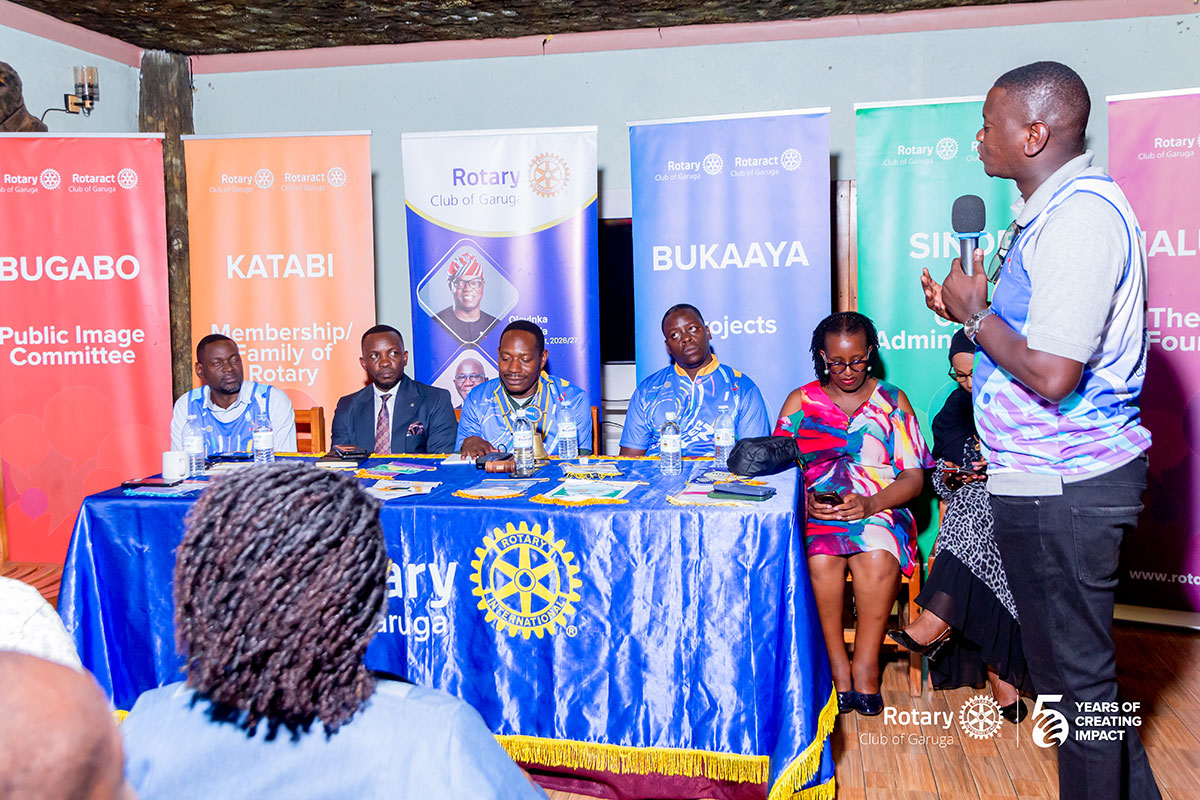
THE 2026 ROTARY CANCER RUN AT A GLANCE
Edition 15th
Date: Sunday, 30 August 2026, from 6:00 a.m.
Venue: Kololo Independence Grounds and major towns across Uganda
Theme Ggwanga Mujje
Cause: Completion of the One Stop Cancer Centre at Nsambya Hospital
Kits: Vest UGX 30,000 | T-shirt UGX 100,000
Register: events.centenarybank.co.ug/event/3 | GonzaPay app | *211#
Garuga’s commitment: 200 kits
Enquiries info@rotaryugandacancer.org
The Rotary Club of Garuga is running two hundred strong in the 2026 Rotary Cancer Run. Kits, teams and sponsorship enquiries are welcome.